

Applications / Environments — Implementation
Getting the right hearing protection on site is not a product decision. It is an implementation decision.
Issuing the correct product is one step. Making sure it fits, gets worn consistently, meets compliance requirements, and stays in place across shift changes and staff turnover is a different problem entirely. Pacific Ears works through both.
The Problem
Why hearing protection
programs fail
Most hearing protection failures are not selection failures. The product chosen is often appropriate. The failure happens downstream: in how protection is fitted, how workers are introduced to it, how replacement is managed, and how wearing compliance holds up over time.
A hearing protection program that looks correct on paper can still leave workers underprotected if implementation is inconsistent. Earplugs inserted incorrectly provide a fraction of their rated attenuation. Custom protection that is never properly fitted does not perform as specified. Replacement programs that are unclear or inconvenient produce the same result as no program at all: workers defaulting to whatever is available or nothing at all.
Pacific Ears approaches implementation as a defined operational process, not a one-time product handover.
On-site
At your facility
Individual
Per worker
Ongoing
Supply managed
On-Site Layer
Where the program
becomes real
The on-site layer is where the program becomes real.
Site assessment
Before any product is specified or fitted, Pacific Ears works through the operational environment: noise levels, communication requirements, PPE compatibility, shift structure, and existing wearing behaviour. The assessment shapes the specification. The specification shapes the implementation plan.
Fitting and rollout
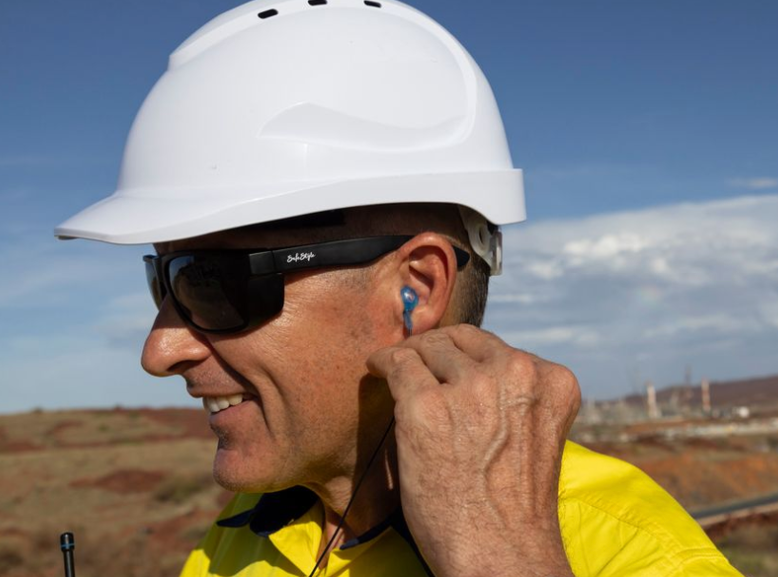
Custom hearing protection requires individual fitting. Pacific Ears conducts on-site fitting visits, working through the workforce systematically. Each worker is fitted individually, with ear impressions taken on site by trained staff. This is not a one-size event. Volume and site logistics are factored into the rollout schedule.
Fit testing integration
Where fit testing is part of the program, it is built into the rollout process rather than treated as a separate exercise. Verified individual attenuation records are produced alongside the fitting, creating a complete implementation record from day one.
Worker introduction
Workers who understand why they are wearing protection, and who have protection that is comfortable and communication-compatible, wear it more consistently. Pacific Ears includes worker-level introduction as part of the on-site process, not as an afterthought.
Replacement and ongoing supply
Custom hearing protection wears over time. Ear canals change. Staff turn over. A program without a clear replacement pathway defaults to workers using degraded protection or nothing. Pacific Ears manages ongoing replacement supply and can structure replacement programs around site-specific timelines and staff numbers.
Engagement Process
From first contact
to a running program
The broader engagement process runs from first contact through to a functioning, documented hearing conservation program.
Documentation at every step
Every step of the program produces records. Fitting records, fit test results, replacement history, and compliance documentation are held under the company profile and accessible by authorised staff. When an audit happens, the records are already organised.
Needs assessment
The starting point is understanding what the site requires, not what product fits a budget. Pacific Ears works through the operational requirements, the compliance obligations, the existing program gaps, and the workforce profile before any recommendation is made.
Program design
Based on the assessment, Pacific Ears structures a program recommendation covering protection specification, fitting approach, fit testing, replacement cycle, and documentation framework. This is not a generic proposal. It is built around the specific site.
Implementation
On-site rollout as described above. Scheduled, resourced, and managed against the agreed plan.
Documentation and audit support
Every step of the program produces records. Fitting records, fit test results, replacement history, and compliance documentation are held under the company profile and accessible by authorised staff. When an audit happens, the records are already organised.
Ongoing support
Hearing conservation is not a one-time event. Staff change. Environments change. Pacific Ears provides ongoing support for program maintenance, including replacement supply, re-fitting for new staff, and program review as the site evolves.
Key Applications
Where implementation programs apply
Industrial manufacturing
Large workforce rollouts with fit testing and replacement programs
Mining
Remote site implementation with documentation and audit support
Aviation
Ground crew program implementation with PPE compatibility requirements
Utilities
Multi-site programs with variable workforce and shift structures
Emergency services and defence
Implementation with communication system integration
Transitioning organisations
Any organisation moving from disposable to custom hearing protection at scale
Implementation Stories
From the field
Documented implementation outcomes coming here
Case studies from site rollouts — workforce size, industries, compliance results — will be added once client examples are confirmed. This section is reserved for verified, real-world results.
Next Step
If your current program is a product on a shelf rather than a running implementation, that is the gap worth addressing.
Contact Pacific Ears to discuss what a site assessment and implementation plan looks like for your organisation, or use the Decision Support tool to identify where your current program has gaps.
Share your workplace context
for a practical recommendation.
Tell us about your noise environment, team structure, and communication needs so Pacific Ears can advise on a suitable pathway for assessment, fitting, and implementation.
Reviewed by the B2B team
Your details are reviewed before we respond, so the next step is relevant to your workplace.
AS/NZS 1270 context
Guidance can include tested hearing protection options and documentation relevant to Australian and New Zealand workplaces.
Site and rollout planning
Where appropriate, Pacific Ears can discuss fitting logistics, site coordination, and staged implementation.
"Pacific Ears helped us move from individual product decisions to a clearer workplace fitting and support process."
— Workplace Safety Team
Request a structured recommendation
This is not a general enquiry form. The information provided allows us to respond with a relevant and structured recommendation, rather than a generic answer.
Reviewed by Pacific Ears · Structured response · Your data is secure